Why Commercial Fleet Maintenance Is One of the Most Overlooked Essential Industries
The market most buyers ignore—and why serious operators are paying attention
Most people looking for a business opportunity are chasing visibility, not stability.
They look at restaurants, retail storefronts, and recognizable franchises—without realizing that some of the most durable businesses operate almost entirely out of sight.
There’s a fundamental misunderstanding in how people evaluate opportunity. Visibility gets mistaken for viability.
Retail businesses feel tangible. You can see customers, foot traffic, and activity. But what often gets overlooked is how fragile those models can be—dependent on location, consumer behavior, and constant marketing just to maintain baseline revenue.
Meanwhile, essential B2B services—especially those tied to infrastructure and operations—rarely get the same attention, despite far stronger underlying demand.
Instead of asking, “What business is popular?” the better question is: What business is necessary?
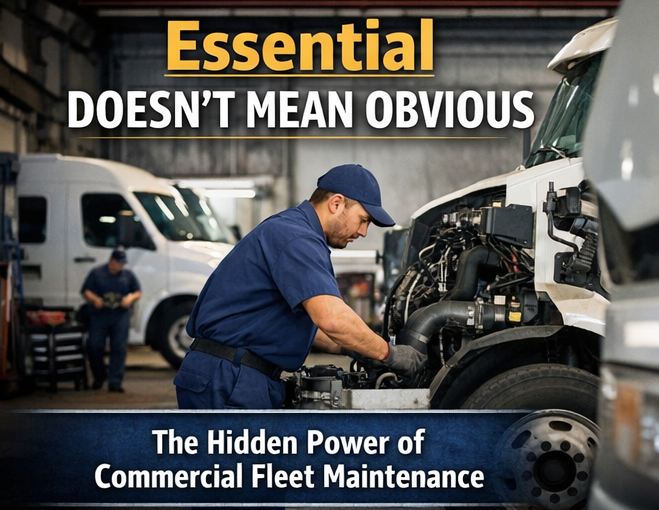
Commercial fleet maintenance sits firmly in that second category.
Every industry that relies on vehicles—logistics, construction, utilities, and last-mile delivery—depends on uptime. When those vehicles stop, operations stop. That creates a constant, non-optional demand for service.
And increasingly, companies are choosing to outsource that responsibility.
This shift from in-house maintenance to outsourced service providers isn’t a passing trend—it reflects a broader change in how businesses operate. Companies are focusing on efficiency, cost control, and reliability, and outsourcing fleet maintenance aligns directly with those priorities.
For someone evaluating business ownership, this matters.
It means you’re not chasing customers—you’re stepping into an environment where demand already exists and continues regardless of economic cycles.
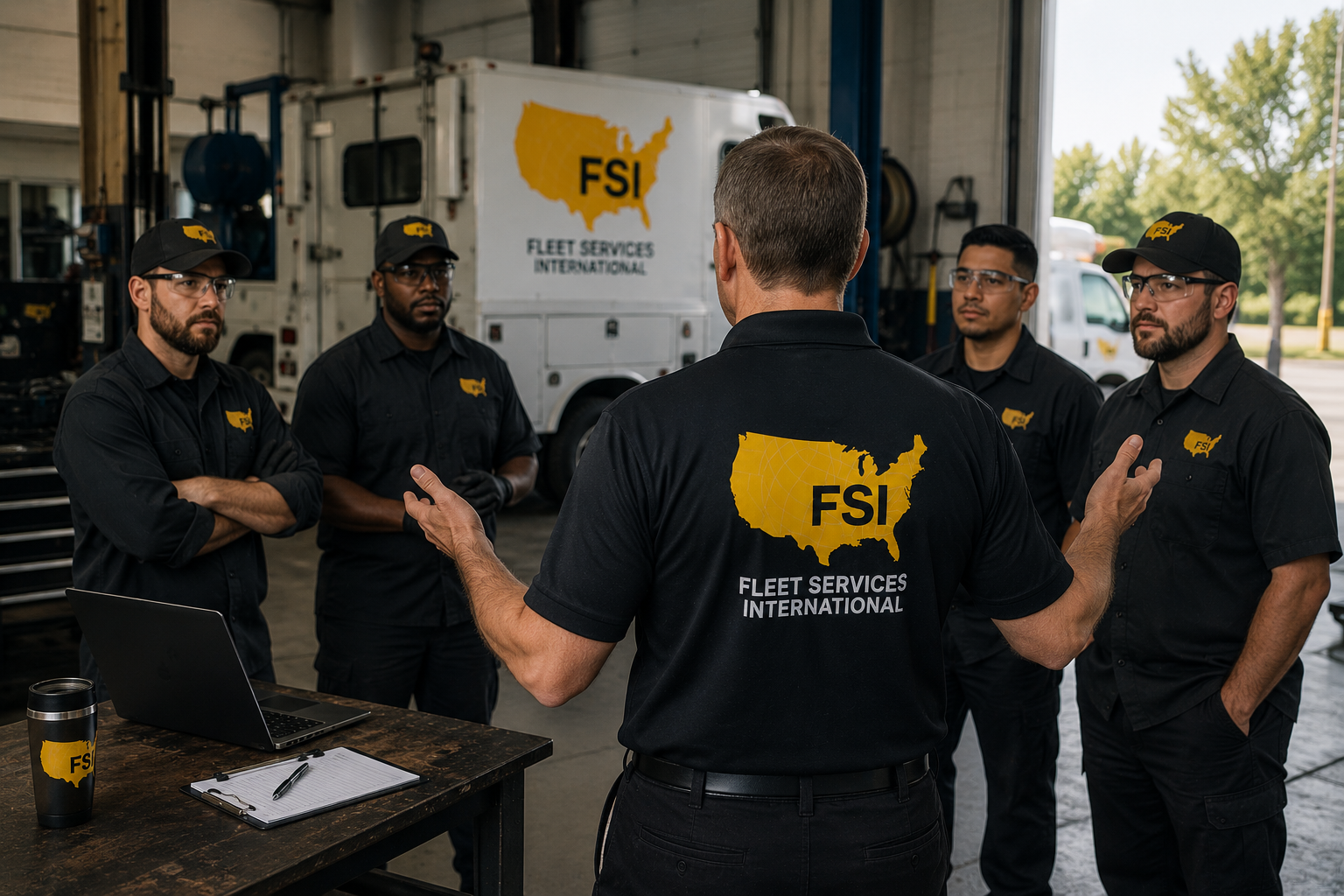
Within that context, structured models like FSI become relevant.
Rather than building from zero, operators enter a framework that provides defined territory, vendor access, and support infrastructure—all designed to support long-term commercial relationships. The focus isn’t on one-off transactions, but on becoming a reliable partner to businesses that can’t afford downtime.
That distinction changes everything.
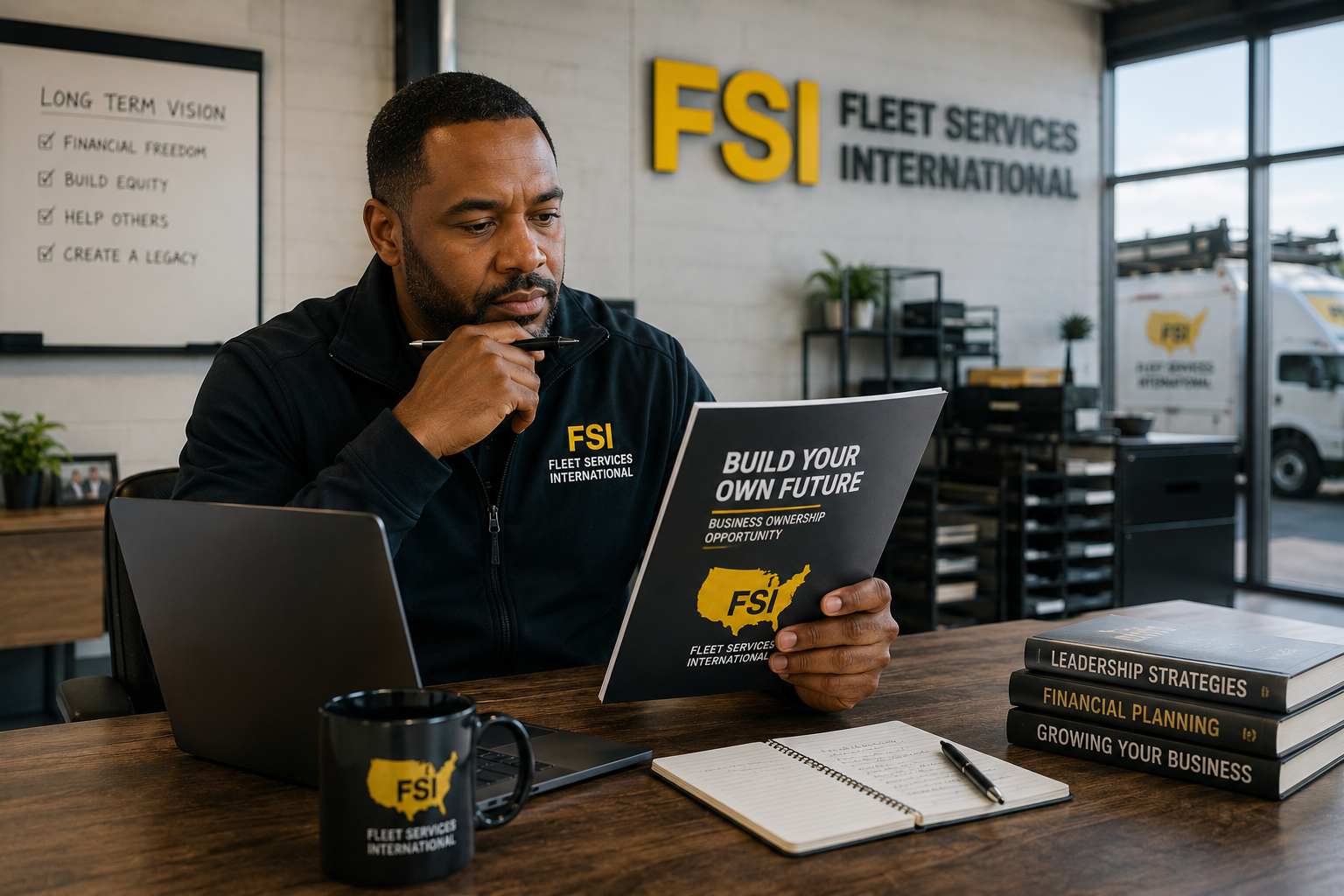
This type of opportunity is best suited for individuals who are serious about building something durable—people who understand the value of B2B relationships, who are comfortable operating in a service-driven environment, and who are prepared to lead.
It is not designed for those looking for passive income, quick wins, or trend-driven opportunities. It requires ownership, decision-making, and consistency.
The most resilient businesses are rarely the most visible.
Commercial fleet maintenance doesn’t rely on hype, foot traffic, or consumer trends. It exists because businesses need it to function.
For the right operator, that’s not just stability—it’s a foundation to build on.